
Asset-based lending for business purchases explained
Asset-based lending for business purchases is the financing structure that buyers reach for when the target company has substantial hard assets but the cash flow alone is not strong enough to support a conventional acquisition loan at the size you need. The lender underwrites against the value of the collateral first and the cash flow second, which flips the usual lending equation on its head and opens up deal structures that would otherwise be impossible to close.
This piece walks through what asset-based lending actually is, how the pricing and advance rates work, when it fits a small business acquisition, how it compares to the other financing layers in the capital stack, and what the practical steps look like to secure it without giving up control of your operating flexibility.
What asset-based lending actually is
Asset-based lending, often shortened to ABL, is a form of secured financing where the loan size and the loan terms are driven primarily by the value and quality of the borrower’s underlying assets. The lender takes a first-priority security interest in those assets, monitors them closely over the life of the loan, and adjusts the available borrowing base as the asset values move up or down.
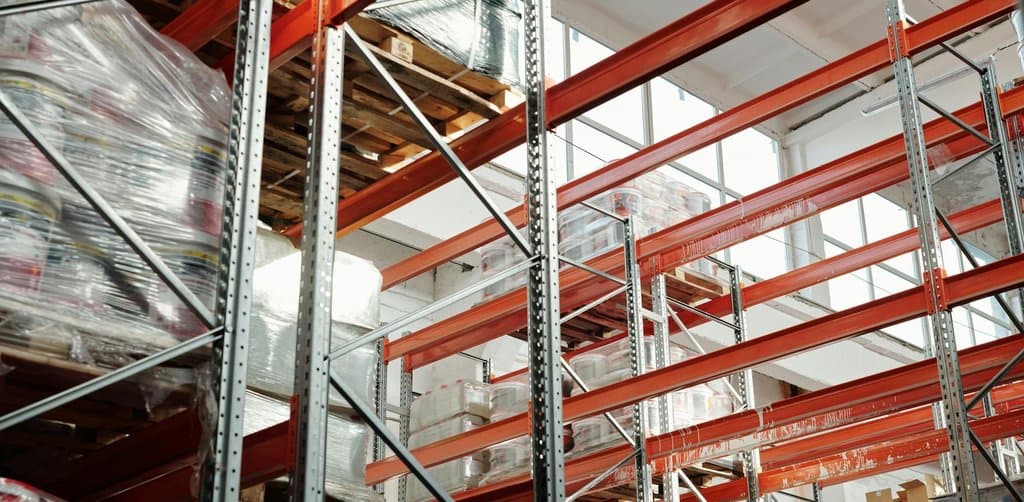
The assets that typically anchor an ABL facility include accounts receivable, inventory, machinery and equipment, real estate, and sometimes intellectual property or other intangibles. Each asset type carries a different advance rate (the percentage of the asset’s value the lender is willing to lend against), and the combination of those rates determines how much capital the borrower can access.
For a business acquisition, ABL becomes interesting when the target company holds enough qualifying assets to cover most or all of the purchase price. In that case the buyer is essentially borrowing against the company they are buying, which is a different mental model from a conventional cash-flow-based business acquisition loan that underwrites against the projected earnings of the combined operation.
How ABL differs from conventional cash-flow lending
A conventional cash-flow lender looks at trailing EBITDA, debt service coverage ratios, and operating projections in order to size the loan. The collateral is part of the picture, but the loan size is driven by what the cash flow can comfortably service.
An asset-based lender flips that priority. The collateral pool is what drives the loan size, and the cash flow has to be sufficient to service the resulting debt, but the cash flow is not what determines how much the lender will lend. That distinction matters because it allows ABL to support deals where the cash flow is too volatile or too thin for conventional underwriting, as long as the assets are strong.
How ABL pricing and advance rates work
The pricing on an asset-based facility breaks down into two components. The first is the interest rate, which is typically quoted as a spread over a reference rate (SOFR or prime), usually somewhere between 2% and 6% over depending on the credit profile and the asset quality. The second is a series of fees including a closing fee, an unused line fee, a monitoring or field exam fee, and sometimes an audit fee.
The all-in cost of ABL for a business acquisition usually lands somewhere between 7% and 12%, which sits above conventional senior debt pricing but well below mezzanine. That spread reflects the lender’s elevated monitoring effort relative to a simple term loan, plus the operational complexity of managing a borrowing base that fluctuates as inventory and receivables move.
Advance rates are where ABL gets specific. The lender publishes (or negotiates) a percentage of each eligible asset class that they will lend against, and the borrowing base is the sum of those advances. Here is what a typical small business ABL advance rate schedule looks like:
| Asset Class | Typical Advance Rate | Notes |
|---|---|---|
| Eligible accounts receivable (under 90 days) | 80% to 85% | Excludes related-party, foreign, or disputed AR |
| Eligible inventory (raw materials) | 50% to 60% | Excludes slow-moving or obsolete stock |
| Eligible inventory (finished goods) | 60% to 70% | Higher rate for in-demand finished product |
| Machinery and equipment (FLV) | 70% to 80% | Based on forced liquidation value, not book |
| Commercial real estate | 65% to 75% | Often a separate term loan, not revolver |
The eligibility rules matter as much as the advance rate. Receivables over 90 days are typically excluded. Inventory has to be in good condition, in working locations, and free of consignment claims. Equipment is appraised at forced liquidation value, which is materially lower than book value or replacement cost.
Why advance rates move over time
One feature of ABL that buyers sometimes miss is that the borrowing base moves daily as receivables turn over and inventory cycles. If the target company has a seasonal business, the available borrowing base could be substantially higher in peak season than in trough months, which means the buyer needs to model the seasonality carefully when projecting cash flow availability.

When asset-based lending fits a small business acquisition
Asset-based lending for business purchases shines in a specific set of deal profiles, and it is the wrong tool for many other situations. Recognizing the fit early saves you weeks of wasted lender conversations.
The clearest fit is an acquisition where the target has a strong balance sheet relative to its earnings. Distributors, manufacturers, equipment rental businesses, transportation companies, and certain types of service businesses with significant accounts receivable all tend to have asset bases that comfortably support ABL. The advance rates against those assets often generate more borrowing capacity than a cash-flow lender would extend.
The second clear fit is a turnaround or value-acquisition situation where the cash flow is depressed but the asset base is intact. In those cases a conventional lender will not stretch, but an ABL lender can underwrite against the assets and trust that the buyer will rehabilitate the operation over time. The borrower pays a premium for that flexibility, but the alternative is often no deal at all.
ABL is the wrong fit when the target is asset-light (services, software, professional firms), when the cash flow comfortably supports a conventional acquisition loan, or when the buyer wants the simplicity of a single fixed-term note rather than the operational overhead of a borrowing base.
Comparing ABL to other acquisition financing options
Most acquisition capital stacks combine multiple financing layers, and ABL is one of several options buyers consider when building the stack. A senior business acquisition loan is the cheapest layer when the target’s cash flow supports it.
Mezzanine financing for small business acquisitions fills the gap between senior debt and equity when neither stretches far enough. Bridge loans for business acquisitions offer short-term capital to close quickly when permanent financing is not yet in place. Acquisition financing for franchises is a specialized product designed for franchise system buyouts with brand-specific underwriting.
ABL is the right call when the target’s assets are the strongest part of the credit story, and it pairs well with mezzanine or seller paper to complete a stack on a more complex deal.
Industries and asset types where ABL works best
Not every industry produces the kind of asset base that supports a meaningful ABL facility, and the credit committees at asset-based lenders have strong preferences. Understanding those preferences helps buyers know in advance whether ABL is worth pursuing.
Distribution and wholesale businesses are the textbook fit. They typically carry substantial inventory and generate consistent accounts receivable from credit-worthy customers. The combined borrowing base from those two asset classes is often enough to fund the majority of an acquisition.
Manufacturing companies are another strong fit, especially when the operation owns its equipment outright and the equipment has clear forced liquidation value. The complication is that custom or highly specialized equipment can be hard to appraise, which lowers advance rates and complicates the diligence process.
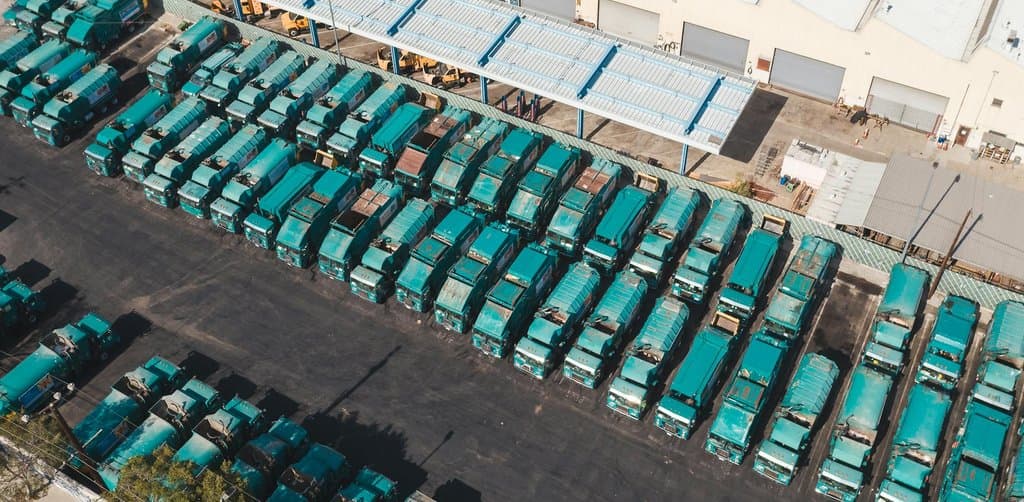
Transportation, logistics, and fleet-based businesses can also work well with ABL, particularly when the underlying vehicles or equipment are titled assets that can be cleanly collateralized. The advance rates on titled equipment tend to be aggressive because the lender has clear recovery paths in the event of a default.
Service businesses, software companies, professional firms (law, accounting, consulting), and similar asset-light operations are typically a poor fit. The accounts receivable component might support a small ABL line, but the absence of meaningful inventory or equipment means the total borrowing capacity is rarely enough to fund a meaningful acquisition.
The diligence process for ABL
Asset-based lender diligence is more operationally intensive than conventional lender diligence. The lender typically commissions a field exam, an inventory appraisal, an equipment appraisal, and sometimes an accounts receivable audit before closing. That diligence can take six to ten weeks and adds material cost to the closing budget.
For a small business acquisition, the diligence cost can be a meaningful percentage of the deal size, and the buyer often absorbs those costs at closing. Budgeting for the diligence work up front prevents the unpleasant surprise of a fifty thousand dollar diligence bill landing on the closing statement.
The ABL process from initial approach to closing
Securing asset-based lending for a business acquisition takes time, and the sequence is fairly predictable once you understand the lender’s perspective. Building a clear runway helps avoid the situation where the deal timing collapses because the financing is not ready.
The first step is preparing a complete information package on the target. The lender will want to see at least three years of audited or reviewed financial statements, a detailed accounts receivable aging report, an inventory listing with cost and location data, an equipment list with current condition notes, and a tax return reconciliation. The more complete the package at first submission, the faster the lender can move.
The second step is shopping the deal to two or three ABL lenders that focus on your deal size and industry. ABL is a relationship business, and lenders compete on advance rates, eligibility definitions, monitoring intensity, and pricing. Getting comparable term sheets gives the buyer real negotiating power on rates and eligibility.
The third step is the field exam and the appraisals, which happen after a term sheet is signed but before close. This is where unpleasant surprises sometimes surface (inventory turns out to be slower than the company represented, receivables include more related-party balances than expected, equipment is in worse condition than disclosed). Building a small contingency into the deal economics in order to absorb these discoveries is wise.
The fourth step is final credit approval, documentation, and closing. The credit agreement for an ABL facility is substantially more complex than a conventional term loan because it has to define eligibility criteria for each asset class, set monitoring requirements, establish reporting cadence, and address what happens if the borrowing base shrinks below the outstanding balance.
Risks and tradeoffs worth understanding
Asset-based lending solves real problems for the right deals, but it introduces operational complexity that buyers should understand before signing a term sheet. The biggest of these is the daily borrowing base management that ABL requires.
Most ABL facilities require the borrower to submit a borrowing base certificate weekly or monthly, listing eligible receivables and inventory by category. That certificate is the basis for how much the lender will advance, and it has to be accurate, timely, and supported by clean underlying data. Companies that have not invested in their financial systems often struggle with this requirement, and the lender’s patience for late or inaccurate certificates is limited.
Field exams happen on a recurring basis, typically annually for a healthy borrower and more frequently if the lender has concerns. Each exam carries a cost (usually borne by the borrower) and creates internal disruption while the lender’s team is on site reviewing the operation.
Covenants and operational restrictions
ABL credit agreements typically include covenants that restrict the borrower’s flexibility on key operational decisions. Selling significant assets without lender consent, taking on additional secured debt, making distributions above a defined threshold, and changing key management often require lender approval. That being said, the covenants in a well-negotiated ABL facility are usually less restrictive than a comparable cash-flow loan, because the lender’s protection comes from the collateral position rather than from financial maintenance covenants.
The intercreditor dynamics get more complex when ABL is combined with other debt layers. If you are pairing ABL with mezzanine, the intercreditor agreement has to clearly define which lender controls the collateral, who gets paid first in a workout, and what each lender’s enforcement rights look like. Negotiating those intercreditor terms up front prevents painful surprises later.
Refinancing and exit considerations
ABL facilities typically have a three to five year initial term with annual renewal options. Most healthy borrowers refinance or extend at maturity without major drama, but the lender does have the right to walk away or materially change the terms if the credit story has weakened. Buyers should plan for a refinance window twelve to eighteen months before maturity rather than assuming the existing lender will continue indefinitely.
Putting it together
Asset-based lending for business purchases is the right answer when the target company holds substantial qualifying assets and the buyer wants to maximize the senior debt capacity available to fund the acquisition. The operational complexity is real, but for asset-rich targets the borrowing capacity often exceeds what any other lender will provide.
If you are looking at an acquisition where the target’s balance sheet is the strongest part of the credit story, ABL deserves a serious look. Build the information package early, shop the deal to multiple lenders, budget for the diligence cost, and negotiate the intercreditor terms carefully if you are stacking ABL with mezzanine or seller paper. The right structure can close deals that conventional cash-flow lending simply will not support.
Good luck.